Tuesday, June 24, 2014

Wednesday, June 18, 2014
Chapter 9: What Motivates Photojournalists

Photo By: Kayla Desmarais
Made with : Framatic app
In my map I show 5 different things
that motivate, inspire, and drive me. The top left shows my boyfriend and my
dog who create my little family that give me day to day support with all my
battles. Top right is a saying that I live by “without struggle there is no
progress”-Fredrick Douglas 1857 (source) who fought for equal rights. Bottom left is my
younger brother who is always there to help me with whatever I have a hard time
with. Homework to friend problems he tries to fix it all. And then bottom right
is my parents who have always driven me to be the best that I could be without
ever giving up on me.
Giles Duley

Photo By: Giles Duley (self portrait)

Photo By: Giles Duley
The first photojournalist who has
great motivation and determination is Giles Duley. He is an exceptional man who
went into the center of conflict and ended up stepping on a land mind which
caused him to lose both of his legs and his left arm. Despite what had happened
to him as soon as he got prosthetics he was rite back into those conflict areas
taking photographs. In an interview Giles stated “I wanted to tell the stories
of people who didn't have a voice. And try to find some of those stories that
go unreported.” “I was there in the first place because I thought I could make
a difference”.(source)
I know nothing can compare to Giles
motivation to losing his limbs from any of my motivations. But we both try and
speak for those who can’t. As a nursing student our teachers tell us that we
are the voice and advocate for the sick and hurt. Without us they would have no
source of protection.
Yuri Kozyrev

Photo By: Russia Beyond the Headlines

Photo By: Yuri Kozyrev
Yuri Kozyrev a native of Russia
spent most of his career shooting war efforts in Afghanistan, mostly of American
troops bringing home thousands of pounds worth of equipment. Having such a
harsh career it was off the beaten path for him to showcase a softer side. It was
not until Time magazine asked
if he would be willing to document the performance of Swan Lake by the Russian ballet. Reluctant at first he decided to
give it a try. “You’re in a tough place,
seeing what the soldiers are going through, and suddenly you’re in a place with
an incredible history, incredible beauty. When I was back stage shooting Swan
Lake I knew it is the most famous ballet in the world. Not only its music, but
the choreography has been recognized as a masterpiece of the ballet world. It’s
one of the great achievements of Russian culture.” (source)
Along with Yuri where I am from
motivates and inspires me to do bigger and better things. Even though I am
lucky enough to live in a part of the United States that would never see any
military conflict, it pushes me to make my community proud of what I have accomplished.
Gordon Parks

Photo By: Bio.com
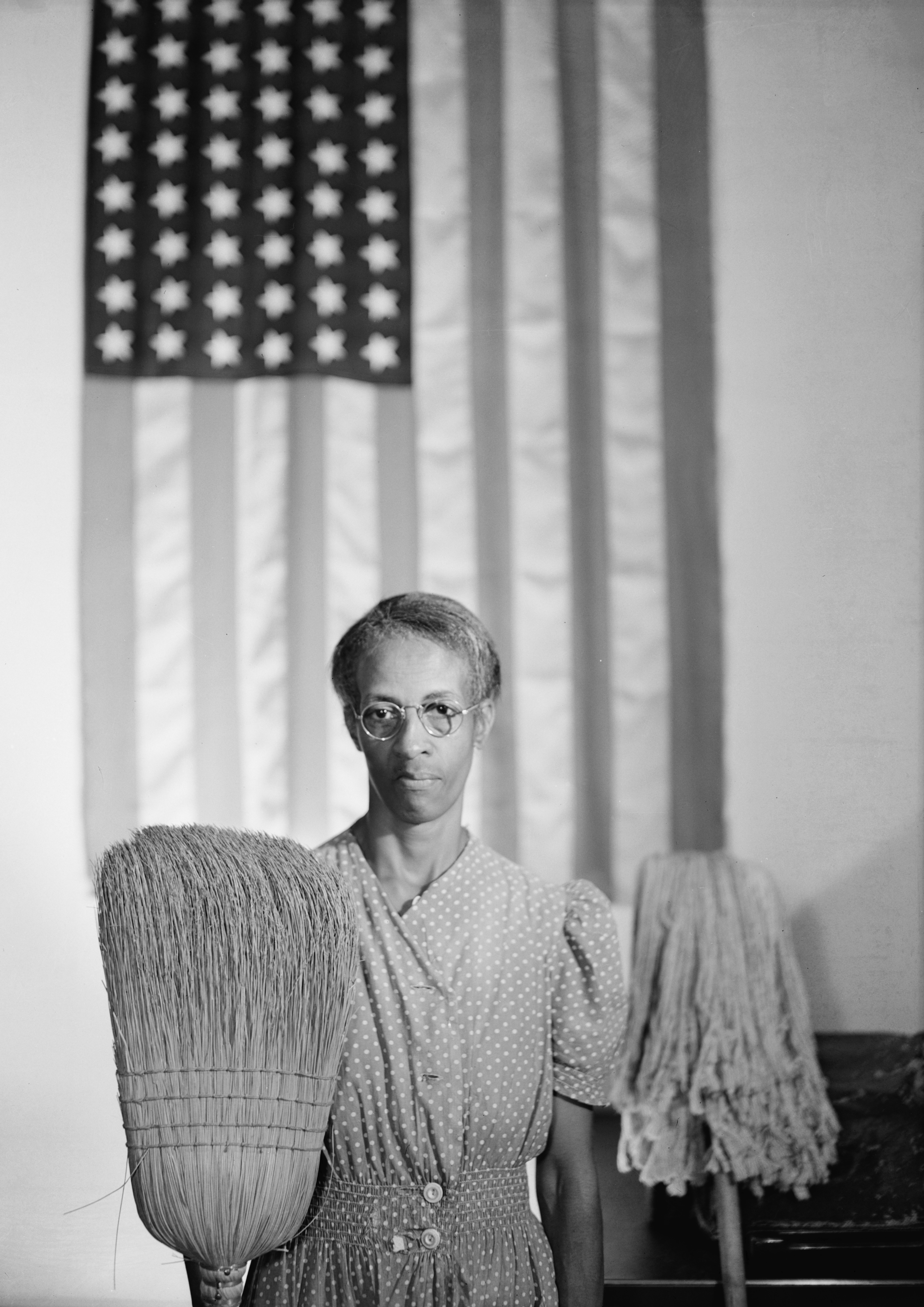
Photo By: Gordon Parks
Gordon Parks worked in the 1940’s
as a photojournalist who focused mainly on capturing the discrimination against
African Americans at the time. He is most famous for the photo above of the
lady with a mop and broom in each hand, and an American flag as the back drop. This
was a spinoff of the painting American
Gothic by Grant Wood. This got Gordon recognition that African Americans
should have equal job opportunities as well as being allowed to be in the same vicinity
as whites in all public places. This was the fuel for his motivation to capture
these images of discrimination. (source)
Just like Gordon was inspired to do
his work against discrimination I am also inspired by the words of an African American
equal rights activist. Fredrick Douglas’ quote that I mentioned above are words
that I am sure both Gordon and I will live by.
Monday, June 16, 2014
Chapter 8 Photojournalism and Bias

Photo By: Ed Clark of Life Magazine
"Going Home"
In the image by Ed Clark’s “Going
Home” we see a man in the navy weeping while playing the accordion with women
in the background who also seem to be grim. The first thing you wonder to
yourself when you look at this photo is why is this man crying? Are they tears
of joy or sadness? In my first reaction I could tell that they were from
sadness. I could tell that he was in the navy from the anchor on his hat and
knew that these strong military men don’t cry over spilt milk, so it must have
been something devastating.
Principle 1: Black and White or
Color?: In this photograph the photographer decided to use black and white
film instead of color, even though color was available during the time period. It
created a crisp contrast between light and dark colors. It also played a little
bit with the time period taken in 1945 African Americans still did not have
equal rights in the United States.
Principle 2: Subjects
Expression: in this photo the subject has a rare venerable expression that
we don’t see to many service men had. He is in a sense of loss and grief that
is overwhelming him to the point where he can’t fight back his tears.
Principle 3: Rule of Thirds: In
this picture Ed Clark the photographer decided to use the rule of thirds by not
putting the subject in the center of the picture. This is a common concept that
many photographers use to draw the eye to many different places in the background
and foreground.
Truth

Photo By: John Decker
John Decker has a tendency of
photographing the truth about homelessness in Northern California. On his
website he has many folders of where he went around taking pictures of the
homeless doing their everyday tasks. In my
own “ways of knowing” I used sense perception to tell me that this was showing
the truth behind the image (wok). People don’t choose to be homeless; they just make
choices that lead them to it. John Decker has a great view point of these
homeless men and women. As Shahidul Alam stated in his interview from the
content “any time that you are really able to tell the stories about the people,
is when you live their lives, you breathe the air that they breathe, you share their
concerns and you look out for them in the same way.”(youtube) This is exactly what John
dose with all of his photography subjects.
Principle 1: Quality of Light:
In this photo John’s quality of light is ok in a sense. It seems to be a hazy
day outside with lots of overcast. But he still captured enough light to see
the contrast with all of the faces.
Principle 2: In or out of focus:
In this photograph the subjects in the foreground are in focus while the
background seems to be a bit out of focus. His main concern was to capture his
homeless subjects as they hang out by the water.
Principle 3: Texture: In
this picture there is an endless variety of textures. We have the wet river in
the background, the soft fuzziness of the flannel shirt and sweatshirt. We have
the course damp dirt on the ground. And also we have all the textures of the bark
on the tree trunks and twigs.
Not the Truth

Photo By: Kitra Cahana
My generation of people in their
early 20’s seem to have a bad reputation with older generations today. As Professor
Nordell stated in his video “older generations promoting that young people are
always on their phones, with this constant barrage of videos and twitter and
instant messaging.” (youtube) And this is quite true for the majority of 20 something
year olds but not for all. The older generation is quite bias against us just
in the way professor Nordell stated. 50 and 60 year olds think that all young
adults don’t know how to work without technology and joke with saying that we
would die without it. But how is it any different from the older generations
and radios or typewriters. Could they have had enjoyment and completed tasks
without their modern technologies? This is the way we were raised and we can’t
help it. In the picture by Katira it shows young adults at a dance party with black
lighting and paint everywhere, it is the stereotypical version of us that older
adults are bias against. Where in fact only a hand full of young adults even
have the time of thinking about having an evening like this. I came to this
understanding by my “emotion/intuition” from the four ways of knowing (Woks)
Principle 1: Contrast
Appropriate: in this photograph Katira brilliantly captures the stunning
contrast of bright neon paint against the dancers white shirts. Also there is
contrast where you cannot see any bright colors in the background that is a
dark blue gray color.
Principle 2: Use of shadows: In
this image the use of shadows is everywhere. There is lighting above creating a
shadow underneath every raised arm and tilted head as they dance to the music.
Principle 3: Exposure Time:
for this photo to be captured without any blur anywhere and with such fast
movement of the dancing the exposure time must have been extremely fast. If not
then every aspect of movement would have a streaky blurred aspect to it.
Thursday, June 12, 2014
Chapter 7 The Ethics of Photojournalism

Image By: Worldpress.com
I am sure many of us
have seen recent media of the true side of how much you can edit an image. As photojournalists
we come across the ethical dilemma on a day to day basis of how much editing is
too much editing. We want to edit the image so that it is visually appealing
and grabs the reader’s attention. On the other hand we don’t want to change the
image in any way that it morphs and bends the truth behind the photo.
The NPPA “the voice of
visual journalists” states in there code of ethics two topics that the media
has been proven to not live by.
5. While
photographing subjects do not intentionally contribute to, alter, or seek to
alter or influence events.(NPPA)
6. Editing should
maintain the integrity of the photographic images' content and context. Do not
manipulate images or add or alter sound in any way that can mislead viewers or
misrepresent subjects.(NPPA)
So why is it we do
this? The current beauty media has a negative reputation for altering images. The
world has such a morphed sense of what is beautiful that they will go to any
length to change an image to make it to todays “standards”. World press starts
off with the topic of “When you are in media management, you hold to reigns not
only to what information people get, but how they get it, in what order they
see or hear it and sometimes how they feel about it”(worldpress).
By editing these images
we are ultimately lying to the viewers. Not by words like we are normally used
to, but if we change something to make it different is also a form of lying. This
is an ethical dilemma that will take time to wade through and get rid of. If we
stop lying to the public of what is a standard in beauty, than maybe we will
see less and less young girls trying to be who they are not.
Video by YouTube user: President of the World

Image By: Nitro Magazine
Monday, June 9, 2014
Women Photojournalists-Trials and Triumphs
Ann Rosener
November 25th 1914-May 19th 2012

Photo of Ann Rosener
Photo By: anonymous

Photo of Ann Rosener
Photo By: unknown
Ann Rosener was born on November 25
1914 in San Francisco California. An American
photojournalist mostly remembered for her photographs of home front activities
for the Farm Security Administration in 1942-1943(local gov). Ann came from a well off
family from mother Beatrice Scheelin from Bavaria and Businessman Leland
Stanford Rosener. They were fortunate enough to be able to send her to Smith College
in Northampton Massachusetts where she grew and developed to become an
independent thinking, later graduating in 1935(wiki).
Along with her love for
photojournalism she had a passion for poetry, photography, and graphic design(obituary). One
of the first ways that she became an independent thinker was going against her
parents republican views and voting as a democrat(local gov). This courageous thinking
lead her to photograph the Farm Security Administration from June 1941- June
1943, eventually with the name changing to the Office of War Information to
show the entrance to world war 2(local gov).
Ann went around for 31 assignments
traveling everywhere from Washington DC to Maryland, Iowa, Wisconsin, Michigan,
Illinois, and California. She mostly photographed woman taking over the jobs
that needed to get done while the men were away at war. This included
everything from farming to factory working. In the 1940’s pre-war it was
unheard of for woman to use heavy equipment to do physical labor, but when all
the husbands and fathers got drafted it left the women with no choice but to
get the work done themselves. And with
no men to document Ann stepped up as one of the head photojournalists of the
time and took control of the field and contributed with all of the “man’s work”.(local gov)
On May 19 2012 Ann passed away in
her home after fighting a short illness. She was always quite proud of herself
for breaking through a male dominant career. She never let men get in the way
of her dreams and aspirations. Not even her four different husbands could get
her in her way(obituary).

Photo By: Ann Rosener
Year Taken: 1942
Principle 1: Keep it simple:
in this photo by Ann it shows the simple subject of the woman on the tractor
tending to the farm. It has a simple backdrop of the farm land and crops with
trees and a road in the distance.
Principle 2: Use of Shadows: in this photo there is one large shadow under
the tractor. This shows me that the lady is out working in the sun most likely
around 1 or 2 in the afternoon, the hottest time of day.
Principle 3: Texture: This
photograph shows many different forms of texture. You can see the dusty ground
and all most feel the giant rubber tires. There is also texture with all the
different plants and the woman’s hair blowing in the breeze.
I chose this image because it
really shows the effort that women put towards helping during World War 2. If they
did not step up and tend to the farms there would have been no source of food
for their families. It takes strength to have your husband or son go to war,
let alone having to manage to survive without them.

Photo By: Ann Rosener
Year Taken: 1942
Principle 1: Rule of Thirds:
In this photograph Ann used the rule of thirds but in a cleverly different way.
She used it diagonally where the main subjects are in the center and the
backgrounds are off to the sides.
Principle 2: Subjects
Expression: This Photo shows women hard at work sewing. All of them have a
blank look on their faces as they are trying to concentrate to get the job done.
It also shows that many of them may have other things on their minds like their
loved ones who are off to war.
Principle 3: Quality of Light: In
this photo the quality of light is somewhat poor. This dim-lit factory gave off
an eerie glow of light from up above.
I chose this photo because it is
another example of the hard effort that woman put towards the war in factories.
These women seem grim as they work to get the job done and over with, but I am
sure that they have their husbands, sons, brothers, and nephews on their immediate
minds.

Photo By: Ann Rosener
Year Taken: 1942
Principle 1: In or Out of Focus: This photo is in
great focus. It is sharp and crisp with no blurs of any kind.
Principle 2: What
feeling dose the image create?: this image gives feelings of female empowerment.
It shows that jobs such as welding car parts is not just for men.
Principle 3: dose the image remind you of a work of art
or photograph: this photo reminds me
of the famous propaganda of Rosie the Riveter.
I originally chose this photo
because it reminded me of Rosie the Riveter and how propaganda was used to
encourage woman to get through the war. It also reminded me of my grandfather
who worked as a welder all of his life. It is a hard and physically demanding
job that you do not see women doing that frequently.
Thursday, June 5, 2014
Chapter 5: Midterm Timeline Project

"Developing" my time line project
By Kayla Desmarais

Original image by: William
Talbot


William Talbot

Original image by: Frederick
Scott Archer “sparrow house”
Image source: http://upload.wikimedia.org/wikipedia/commons/thumb/9/95/Sparrow1.JPG/220px-Sparrow1.JPG


Photo of : Frederick Scott Archer
Image Source: http://www.hertfordshire-genealogy.co.uk/images/!/b/bishops-stortford/frederick-scott-archer.jpg
1871 Richard Leach Maddox invented the gelatin dry plate
silver bromide process - negatives no longer had to be developed immediately. With
using black-and-white films and printing paper, a suspension of silver salts
and gelatin is coated onto glass, plastic, or film (wiki). These materials stay stable
and are able to be used many years after they are made. This is very different
from the collodion wet process that needed to be used immediately after it is
processed. This slight advantage gave photojournalists of all kinds the much
needed factor of time. (ency)

Original Image By: Richard Leach Maddox
Image Source: http://www.curious-eye.com/images/dryplate.gif


Photo of: Dr. Richard Leach Maddox
1900 First mass-marketed camera—the Brownie. The Brownie was
a long-running extremely popular camera that was mass produced to be affordable
inexpensive at just $1(wiki). Made by Eastman Kodak this camera introduced the
concept of a snapshot. This very simple cardboard camera took 2 and a quarter
inch square pictures on 117 roll film. This gave people a chance to get
experience with photography without spending a fortune. A very simple camera
gave adults and children the opportunity to experiment with photography both
for family fun and prospective future jobs.(brown)

Original Image by Aislinn Leggett


The Original Brownie Camera

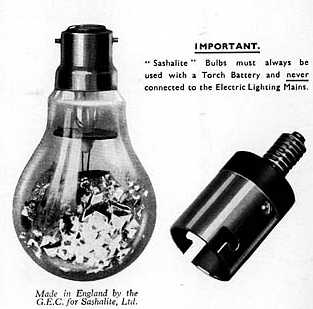

first flash bulbs created
Image Source: http://vieilalbum.com/images/flashbulb.gif
1948 Edwin Land markets the Polaroid camera. The American inventor
and physicist patented an innovative one step process of taking and developing
a photo from one single devise. Polaroid was to manufacture the cameras in November
of 1948 to the public. Up until February 2008 when Polaroid discontinued the
camera people loved the satisfaction of instant photographs.(Polaroid)

Image of: Edwin Land
Original Image Source: http://cognitivecake.files.wordpress.com/2012/11/edwin-land-1.jpg


"Real Men Wear Boots"
Image By: Jeremy Knost

Original Image of: Konica Point-and-Shoot camera


Image taken with: Konica Point-and-Shoot camera
Image By:Ray Parker
Monday, June 2, 2014
Chapter 4
Coincidentally blogs have had a
huge impact on the progression of photojournalism. As I have been blogging
about how photojournalism came to be, it never crossed my mind about the
connection between the two. A blog is an
online community where people can share their thoughts and beliefs on a sort of
thread where people could comment on or pass along the information. This has
made it much easier for photojournalists to get their pictures and stories out
in a free way that many people can see.
In the early 1990’s the modern blog
evolved from the online diary where people could keep an ongoing account of
their personal lives. Today there are thousands of topics of blogs out there
anything from parenting forums, deployed military, journalists, photographers,
and blue collar workers. This has made it very simple and easy for
photojournalists to progress with their work.

Image source: 31 Days 31 Photos
Photo By: Blogger Rick
Digital photo blog post
With the progression of technology
it has become much easier for photojournalists to post photos on line. The process
is simple; you take the picture, upload it to your computer, and post it to
your blog. This process is very simple especially if you have a digital camera
or an iPhone. But let’s say you wanted to use a pre-digital way of photography
as a photo source for your blog. The method you wanted to use was 35mm color
film. You would first have to take the photo; from there you would have to
bring it to a local pharmacy where they would develop the negatives for you and
make prints, eventually waiting up to an hour to get them. The next step once
you obtained those prints would be to use a digital scanner to upload the image
to your computer. Once it is on the computer you proceed with the normal
process as a digital photo.
With these two processes it is
obvious that both completed the task of posting a picture onto a blog post. But
with the technology today nobody would choose to use a 35mm film. The process is
just too drawn out and extensive, in comparison to what you can do with
digital. They both give you a vibrant colored photo, however the steps for
using a digital blog post is much more efficient now a day.

Image source: Eric Kim Street Photography Blog
Photo By: Meyerowitz
Taken with 35mm color film
Subscribe to:
Posts (Atom)